
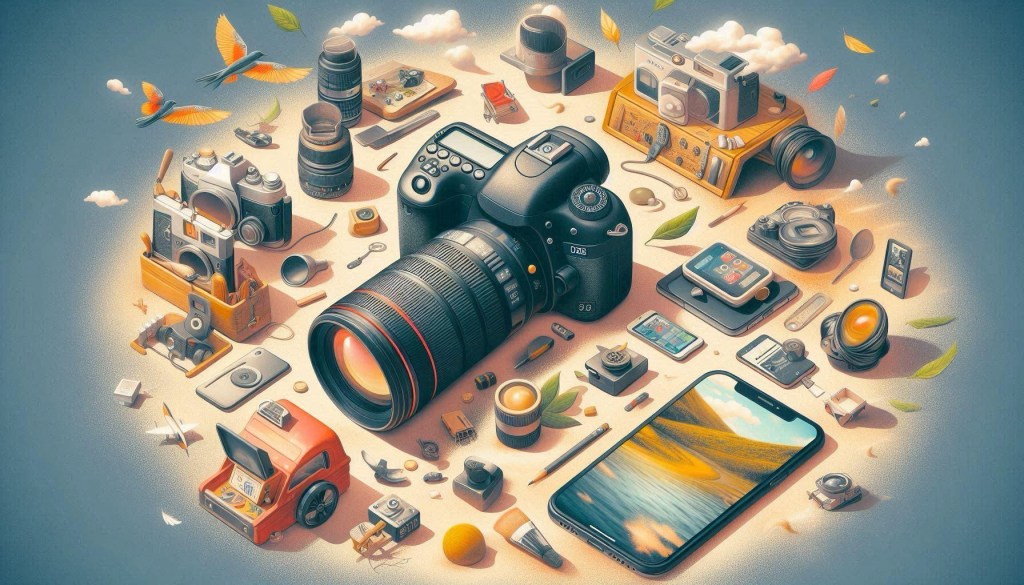
By Dr Lokman Khan
Unleash your creativity on-the-go! Explore how advancements in iPhone cameras are challenging bulky DSLRs for low-light photography in social media, blogging, and vlogging. Discover the trade-offs, the impact of social media compression, and the future of smartphone photography.
- Introduction
- The Needs of Semi-Professional Photographers and Content Creators
- Low-Light Image Quality: DSLRs vs. iPhones
- Portability vs. Image Quality: Striking the Balance
- Creative Control: DSLRs vs. iPhone Photography
- The Power of Post-Processing in Bridging the Gap
- Cost Considerations: DSLR vs. iPhone
- The Impact of Social Media Platforms on Image Quality
- The Evolving Smartphone Camera Market and its Impact on DSLRs
- The Future of Smartphone Photography: Further Shrinking the Gap
- Real-World Experiences: Semi-Professional Photographers on iPhones
- Conclusion – Is Your DSLR Collecting Dust?
Introduction
In the age of instant connection, capturing captivating photos for social media, blogs, and vlogs has become essential for semi-professional content creators. But do you still need a bulky DSLR to achieve professional-looking results, especially in challenging low-light conditions? This blog post dives deep into the capabilities of modern iPhones and explores whether they can truly replace DSLRs for semi-professional photography.

The Needs of Semi-Professional Photographers and Content Creators
The needs of semi-professional photographers can vary depending on their content focus:
- Social Media: Eye-catching visuals that grab attention and encourage engagement (likes, shares, comments).
- Blogs: High-quality images that complement written content and enhance reader experience.
- Vlogs: Compelling visuals that seamlessly integrate with video recordings for a polished look.
While all three platforms prioritize strong visuals, the image size requirements are typically smaller compared to professional photography.

Low-Light Image Quality: DSLRs vs. iPhones
Low-light photography has traditionally been a domain dominated by DSLRs due to their larger sensor size. However, advancements in iPhone camera technology are rapidly closing the gap:
- Larger iPhone Sensors: Newer iPhones boast larger camera sensors that capture more light, resulting in improved low-light image quality.
- Computational Photography: Techniques like image stacking and noise reduction algorithms enhance low-light photos, minimizing grain and preserving detail.
- Night Mode Photography: Dedicated night mode features allow for longer exposure times in low-light, capturing brighter and clearer images.
While DSLRs might still hold an edge in extremely low-light situations, the improvements in iPhones are significant for most semi-professional needs.

Portability vs. Image Quality: Striking the Balance
DSLRs offer superior image quality due to their larger sensor size and interchangeable lenses. However, they come with a significant trade-off:
- Bulk and Weight: DSLRs are bulky and heavy, making them cumbersome to carry around for everyday shooting.
- Missed Opportunities: The process of carrying, setting up, and adjusting a DSLR can lead to missed photo opportunities.
Smartphones, on the other hand, are incredibly portable and always at your fingertips. This allows for:
- Spontaneous Creativity: Capture fleeting moments and unexpected scenes due to the convenience of your smartphone camera.
- Always-Ready Tool: No need to carry extra equipment, allowing you to be prepared for any photographic situation.
The portability of smartphones often outweighs the slight image quality advantage of DSLRs for many semi-professional photographers.

Creative Control: DSLRs vs. iPhone Photography
Creative control is a crucial aspect of photography. Here’s a breakdown:
- DSLR Advantages: Offer a wider range of manual settings like aperture, shutter speed, and ISO, allowing for greater creative control over the final image.
- iPhone Advancements: Modern iPhones provide advanced camera apps with manual controls that mimic DSLR functionality to a great extent.
While DSLRs might still have a slight edge in terms of granular control, iPhones are offering increasingly sophisticated manual options for serious photographers.
The Power of Post-Processing in Bridging the Gap
Post-processing software plays a significant role in enhancing the final image quality. Powerful editing tools available on smartphones and computers can significantly improve photos captured on both iPhones and DSLRs.
- RAW Capture: Both iPhones and some DSLRs offer RAW image capture, which provides more flexibility for editing compared to standard JPEGs.
- Editing Apps: A vast array of editing apps for smartphones allows for adjustments to exposure, color balance, noise reduction, and other aspects.
Skilled post-processing can significantly improve low-light images captured on smartphones, further diminishing the gap between DSLRs and iPhones.
Cost Considerations: DSLR vs. iPhone
The cost of ownership is a major factor when choosing between a DSLR and an iPhone for semi-professional photography:
- DSLR Costs: The initial purchase price of a DSLR body is just the beginning. You’ll need to factor in the cost of lenses, additional batteries, memory cards, carrying cases, and potentially lighting equipment.
- iPhone Costs: While high-end iPhones represent a significant investment, the cost is typically lower than a comparable DSLR setup. Additionally, you’re likely already carrying your iPhone with you, eliminating the need for extra equipment.
Upgrading your iPhone camera every few years can provide significant improvements, whereas DSLRs might require lens upgrades alongside body upgrades for similar advancements.
The Impact of Social Media Platforms on Image Quality
Social media platforms compress images upon upload, potentially affecting the perceived quality. Here’s what to consider:
- Compression Algorithms: Social media platforms compress images to reduce file size and improve loading times. This can lead to a slight loss of detail, especially in low-light photos.
- Display Resolution: Most social media feeds and mobile device screens have limitations in displaying high-resolution images. The minute details captured by a DSLR might not be fully appreciated on these platforms.
While DSLRs might capture more detail, the impact of social media compression and display limitations makes the difference less noticeable for many semi-professional photographers.
The Evolving Smartphone Camera Market and its Impact on DSLRs
The rapid advancements in smartphone camera technology are undeniably impacting the DSLR market:
- Manufacturer Adaptations: DSLR manufacturers are adapting by offering features like mirrorless designs and improved low-light performance to compete with smartphones.
- Targeting Professionals: DSLRs are likely to remain the preferred tool for professional photographers who require the absolute best image quality and extensive creative control.
However, for semi-professional photographers who prioritize portability and convenience, smartphones are becoming increasingly attractive alternatives.
The Future of Smartphone Photography: Further Shrinking the Gap
The future of smartphone photography is incredibly bright, with exciting advancements on the horizon:
- Sensor Technology: Continued improvements in sensor size, pixel technology, and image processing capabilities are expected in future iPhones.
- Computational Photography Enhancements: Machine learning and artificial intelligence will likely play a larger role in enhancing low-light photography and overall image quality on smartphones.
These advancements could further blur the lines between smartphone and DSLR image quality, making iPhones even more compelling for semi-professional photographers.
Real-World Experiences: Semi-Professional Photographers on iPhones
Many semi-professional photographers are successfully using iPhones to create stunning content:
- Travel Bloggers: Leverage the portability of iPhones to capture captivating travel photos and share them with their audience on the go.
- Food Bloggers: Utilize iPhone cameras to photograph mouthwatering dishes with impressive detail and vibrant colors.
- Social Media Influencers: Rely on iPhones to capture lifestyle content and connect with their followers in real-time.
These real-world examples showcase the effectiveness of iPhones in achieving professional-looking results for various content creation needs.
Conclusion – Is Your DSLR Collecting Dust?
While DSLRs remain powerful tools for professional photographers, iPhone cameras have become incredibly capable for semi-professional photography, especially for social media, blogs, and vlogs. Consider these key takeaways:
- Image Quality: iPhone advancements have significantly narrowed the gap in low-light photography compared to DSLRs.
- Convenience vs. Quality: The portability and always-ready nature of iPhones often outweigh the slight image quality advantage of DSLRs for many semi-professional photographers.
- Post-Processing Power: Skilled editing can significantly improve low-light images from both iPhones and DSLRs.
- Cost Considerations: The overall cost of ownership for iPhone photography is typically lower than a comparable DSLR setup.
- Social Media Impact: Compression algorithms and display limitations on social media platforms can diminish the perceived benefits of DSLR image quality.
Call to Action:
Are you a semi-professional photographer using an iPhone? Share your experiences and tips in the comments below! We’d love to hear your thoughts on the future of iPhone photography and its potential to replace bulky DSLRs.
 LK INNOVATE
Leave a comment