
By Dr Lokman Khan
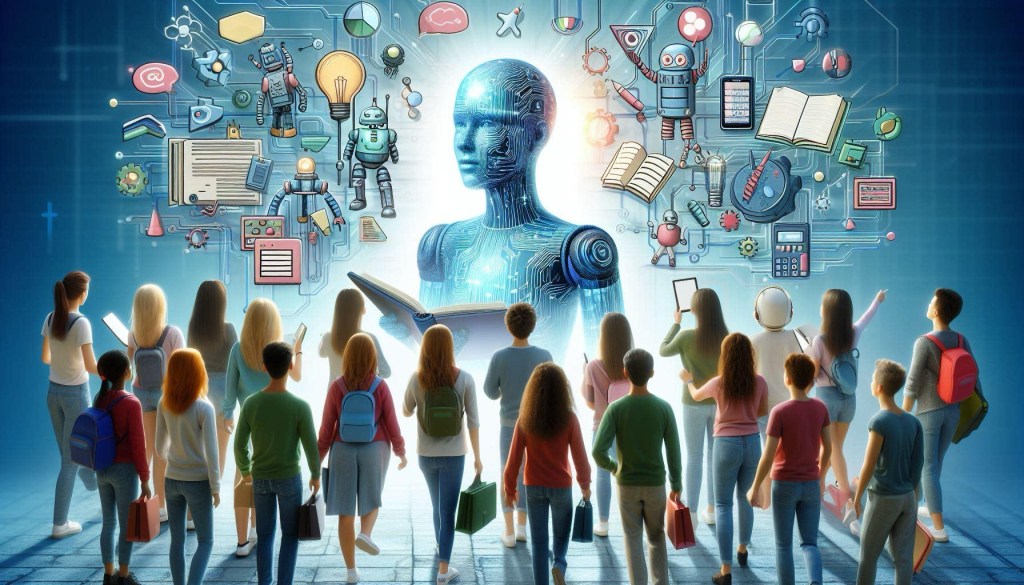
Imagine a classroom where every student receives personalised attention, a tireless tutor available 24/7, and teachers empowered with data-driven insights to optimize learning. This is not a futuristic fantasy; it’s the transformative potential of Artificial Intelligence (AI) in secondary education. However, alongside its promise lies a responsibility to navigate ethical considerations and ensure equitable access. Join us as we delve into the exciting possibilities and pressing issues of AI in secondary education, charting a course towards a future that empowers educators and unlocks the potential of every student.
Table of Contents
- Excerpt
- Introduction
- Personalised learning
- Tutoring systems
- Administrative support
- Teacher training
- Ethical Issues
Introduction
The secondary education landscape is on the cusp of a transformative era. Artificial intelligence (AI) is rapidly emerging as a powerful tool with the potential to personalise learning experiences, empower educators, and streamline administrative processes. However, integrating AI effectively requires a nuanced approach that acknowledges both its immense benefits and inherent challenges. This blog post delves into the multifaceted world of AI in secondary education, exploring its potential for personalised learning, intelligent tutoring systems, administrative support, and teacher training. It also critically examines the ethical considerations and pressing issues that need to be addressed to ensure responsible and equitable implementation.
Personalised learning
AI-powered adaptive learning platforms can personalise the educational journey for each student. These platforms analyse student data such as performance on quizzes, homework assignments, and learning style assessments. Based on this data, the platform tailors the curriculum, suggesting relevant learning materials, adjusting the difficulty level of exercises, and providing targeted feedback. This personalised approach caters to individual student needs, fostering deeper understanding and a more engaging learning experience.
Benefits:
Improved academic performance: By focusing on areas where students struggle and providing targeted support, AI can significantly improve learning outcomes.
Increased engagement: Personalised learning experiences pique student interest, keeping them motivated and invested in their education.
Empowering self-paced learning: AI caters to students who learn at different paces, allowing them to progress through the curriculum at a comfortable speed.
Tutoring systems
AI-powered intelligent tutoring systems (ITS) offer students immediate and personalised support. These systems can answer student questions, provide explanations for complex concepts, and identify areas where a student might be falling behind. Some ITS can even offer virtual simulations or gamified learning experiences to enhance understanding.
Benefits:
24/7 availability: AI tutors are available to students anytime, anywhere, addressing learning gaps outside of classroom hours.
Personalised feedback: ITS can provide feedback tailored to a student’s specific needs and learning style
Scalability: AI tutors can cater to a large number of students simultaneously, providing much-needed support in resource-constrained environments.
Administrative support
AI can significantly alleviate the administrative burden on educators, freeing up valuable time for focusing on core instructional tasks.
Automated grading: AI can automate the grading of multiple-choice quizzes, essays, and other standardised assessments, allowing teachers to dedicate more time to providing personalised feedback.
Streamlined communication: AI chatbots can answer commonly asked student and parent questions, reducing the administrative workload for teachers and school staff.
Data analysis and reporting: AI can analyse vast amounts of student data to identify trends, predict potential problems, and inform targeted interventions.
Benefits:
Increased teacher productivity: Automating administrative tasks allows teachers to focus on instruction and building relationships with students.
Improved efficiency: AI streamlines processes, leading to a more efficient and effective learning environment.
Data-driven decision making: AI-powered data analysis provides valuable insights that can inform better educational strategies.
Teacher training
While AI offers significant benefits, it is crucial to remember that it is a tool, not a replacement for qualified educators. Teachers play an irreplaceable role in fostering a positive learning environment, guiding discussions, and inspiring creativity. However, AI can be a powerful tool for supporting teacher development.
Personalised professional development: AI platforms can recommend personalised professional development resources tailored to a teacher’s specific needs and teaching style.
Real-time feedback and coaching: AI can analyse classroom recordings and provide teachers with feedback on teaching strategies and classroom management techniques.
Creating engaging lessons: AI tools can assist teachers in developing interactive and engaging lesson plans that cater to diverse learning styles.
Benefits:
Empowered and skilled educators: AI can support teachers in their professional development, leading to more effective teaching practices.
Enhanced teacher well-being: AI can reduce administrative burden and workload, allowing teachers to focus on their passion for teaching.
Improved student outcomes: Well-supported, empowered teachers can create a more positive learning environment for students.
Ethical Issues
Integrating AI into secondary education requires careful consideration of ethical issues.
Data privacy: Protecting student data privacy is paramount. Schools need robust data security measures and clear policies regarding data collection, storage, and access.
Algorithmic bias: AI algorithms can perpetuate biases present in the data they are trained on. It is crucial to ensure that AI tools used in education are unbiased and promote inclusivity.
Over reliance on AI: AI should not replace human interaction in the classroom. The human element of teaching, including empathy, critical thinking skills development, and fostering a sense of community, remains indispensable in the educational process.



 LK INNOVATE
Leave a comment