

By Dr Lokman Khan
On this day, let us recommit ourselves to the ideals that drove our nation’s birth: democracy, human rights, and the rule of law. Let us celebrate the diversity that enriches our culture and the unity that fortifies our nation. And let us move forward with the conviction that the sacrifices of the past have laid a foundation for a future filled with hope and opportunity for all Bangladeshis.
- Introduction: The Dawn of Independence
- Economic and Political Disparities: A Deeper Look
- Declaration of Independence: The Turning Point
- Gratitude to the Masses and Leadership: The Heart of the Nation
- Conclusion: Embracing the Legacy
Introduction: The Dawn of Independence
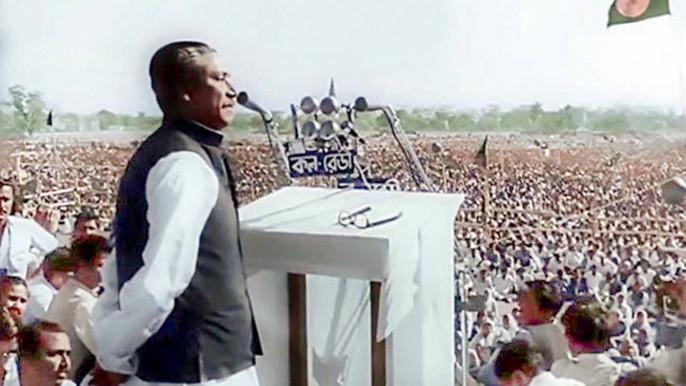
The 26th of March is a day etched in the collective memory of Bangladesh, a day that commemorates the birth of a nation and the triumph of its people’s will. It was on this day in 1971 that Sheikh Mujibur Rahman, the father of the nation, proclaimed Bangladesh’s independence from Pakistan. This declaration was not merely an assertion of sovereignty; it was the culmination of years of struggle for recognition, respect, and equality.
The journey to this historic day was paved with challenges. The people of what was then East Pakistan faced systemic disparities and cultural suppression at the hands of the West Pakistani rulers. Language became a battleground, with the 1952 Bengali Language Movement highlighting the deep-rooted desire for the recognition of Bengali as a state language. Economic exploitation further fueled the desire for autonomy, as the wealth generated from the fertile lands of the East was disproportionately allocated to the development of the West.
The fight for independence was also a fight to preserve a rich cultural heritage that was distinct from that of West Pakistan. The declaration of independence was a resounding affirmation of the Bengali cultural identity, which includes its language, literature, art, and deep-seated traditions. It was a statement that the people of Bangladesh had the right to self-governance—to make decisions that reflected their own values and aspirations.
Independence Day is thus not just a public holiday; it is a profound symbol of the country’s long and arduous struggle for autonomy, cultural identity, and the right to self-governance. It is a day to remember the sacrifices made by countless individuals who believed in the vision of an independent Bangladesh. It is a day to celebrate the resilience and determination that turned that vision into reality.
Historical Background
The Prelude to Partition
The historical backdrop of Bangladesh’s independence is deeply intertwined with the partition of British India in 1947, a monumental event that reshaped the subcontinent’s political landscape. The partition created two separate nations, India and Pakistan, the latter comprising two distinct wings—West Pakistan and East Pakistan—separated by over a thousand miles of Indian territory.
The Geographic and Cultural Divide
The division was not merely geographic but also cultural. West Pakistan was predominantly made up of ethnic groups such as Punjabis, Pashtuns, Sindhis, and Baloch, who were linguistically and culturally diverse from the Bengalis of East Pakistan. The Bengalis, with their rich literary and cultural heritage, felt a strong sense of identity that was often at odds with the political and military establishment of West Pakistan.
Language and Economic Policies
Language became a significant point of contention. The Bengali Language Movement of 1952 was a clear indication of the East’s resistance to the imposition of Urdu as the sole national language. This movement was not only about language but also about the recognition and respect for the cultural identity of the Bengali people.
Economically, the disparities were stark. Despite East Pakistan being the more populous region and a significant contributor to the country’s economy, it received less investment and development funds compared to its western counterpart. This economic neglect fueled resentment and a sense of deprivation among the Bengalis.
The Road to Independence
These disparities set the stage for the eventual struggle for independence. The political awakening in East Pakistan was driven by a desire for self-determination and the right to govern their own cultural, economic, and political affairs. The declaration of independence in 1971 by Sheikh Mujibur Rahman was not just a political act; it was the culmination of decades of struggle against cultural suppression and economic exploitation.
As Bangladesh celebrates its Independence Day, it is essential to remember that the nation’s birth was the result of a long and complex history of division and disparity. It stands as a testament to the resilience of the Bengali people and their unwavering commitment to their cultural identity and political rights.
Economic and Political Disparities: A Deeper Look
The economic and political landscape of pre-independence Bangladesh, then known as East Pakistan, was marked by profound disparities that fueled the desire for self-rule. The region’s economic exploitation by the political elite of West Pakistan was not merely a perception but a documented reality. Resources and revenues generated from the fertile lands and bustling industries of the East were systematically diverted to support the development and stability of the West¹. This led to significant economic discrimination, with East Pakistan receiving a fraction of the investment and development funds compared to West Pakistan, despite its larger population and contribution to the national economy.
Economic Exploitation
The exploitation was evident in various sectors. The head offices of banks, insurance, and commercial organizations were predominantly located in West Pakistan, leading to economic decisions that favored the West. Money was often laundered from the East to the West, and most of the industrial development, including the establishment of mills and factories, was concentrated in West Pakistan. In 1956, for instance, West Pakistan received a budget allocation of 500 crore, while East Pakistan received only 113 crore. Such disparities in resource allocation and infrastructure development stunted the growth of East Pakistan and made its fight for autonomy imperative.
Political Reluctance
The political situation mirrored the economic injustices. The 1970 general elections were a watershed moment for East Pakistan. The Awami League, under the leadership of Sheikh Mujibur Rahman, won a landslide victory, securing 167 out of 169 seats in East Pakistan⁶. This electoral triumph should have paved the way for the transfer of power and significant autonomy for East Pakistan. However, the ruling authorities in West Pakistan, led by President Yahya Khan and the Pakistan Peoples Party chairman Zulfikar Ali Bhutto, were reluctant to acknowledge the results. This reluctance to transfer power, despite the clear mandate, exacerbated the political tensions and was a significant factor leading to the declaration of independence and the subsequent liberation war.
The economic and political disparities between East and West Pakistan were not just contributing factors to the independence movement; they were at the very heart of it. The struggle for independence was as much about gaining economic justice and political recognition as it was about cultural and linguistic identity. As Bangladesh commemorates its Independence Day, it is these disparities and the overcoming of them that are remembered and honoured.
Declaration of Independence: The Turning Point
The declaration of Bangladesh’s independence was a pivotal moment in the nation’s history, a defiant response to years of political and economic subjugation. The crescendo of the Bengali nationalist movement reached its peak with Sheikh Mujibur Rahman’s historic speech on March 7, 1971, at the Ramna Racecourse, now Suhrawardy Udyan. In front of a crowd of over two million people, Sheikh Mujib made an impassioned plea for civil disobedience and effectively laid down the challenge to the West Pakistani regime.
The Historic Speech
Sheikh Mujib’s speech was a masterful blend of political acumen and emotional appeal. He did not explicitly declare independence but instead called for a non-cooperation movement against the regime, which was tantamount to a de facto declaration of independence. The speech is renowned for its powerful rhetoric and is considered by many as the informal proclamation of Bangladesh’s independence, as it galvanized the entire population into action and prepared them for the possibility of a war of liberation.
Operation Searchlight
The situation escalated rapidly when the Pakistan Army initiated Operation Searchlight on March 25, 1971. This brutal military crackdown aimed to suppress the burgeoning nationalist movement in East Pakistan but instead led to widespread atrocities and the 1971 Bangladesh genocide. The operation targeted Bengali civilians, intelligentsia, students, politicians, and armed personnel, resulting in the deaths of hundreds of thousands and the displacement of millions.
The Proclamation of Independence
In the early hours of March 26, 1971, as the military operation was underway, Sheikh Mujibur Rahman declared the independence of Bangladesh¹. This formal declaration was a direct response to the military aggression and represented the unequivocal resolve of the Bengali people to break free from the shackles of oppression.
Major Ziaur Rahman’s Broadcast
The following day, on March 27, 1971, Major Ziaur Rahman broadcasted a message from a captured radio station in Chittagong, reiterating the declaration of independence on behalf of Sheikh Mujibur Rahman. This broadcast was a strategic move to ensure that the message of independence reached not only the people of Bangladesh but also the international community.
Gratitude to the Masses and Leadership: The Heart of the Nation
The nine-month-long liberation war that followed Bangladesh’s declaration of independence was not only a military struggle but also a profound demonstration of the collective will of its people. The war, which lasted from March 26 to December 16, 1971, saw widespread participation from all walks of life. Farmers, students, workers, and intellectuals joined forces to form the Mukti Bahini, the guerrilla resistance movement, which became the backbone of the war effort.
The Sacrifices of the People
The sacrifices made by the Bangladeshi people during this period were immense. It is estimated that three million lives were lost, and hundreds of thousands of women were subjected to unspeakable atrocities. The war displaced millions, with countless families torn apart and homes destroyed. Yet, despite the overwhelming odds, the spirit of the people remained unbroken. Stories of heroism, sacrifice, and the indomitable will to fight for freedom have been etched into the national consciousness, serving as a source of inspiration for future generations.
The Role of Awami League and Its Leaders
The leadership provided by the Awami League, under the guidance of Sheikh Mujibur Rahman, was instrumental in the nation’s journey towards independence. The party had long been a proponent of Bengali nationalism and played a crucial role in organizing civil disobedience movements, such as the Six Point Movement and the 1971 Non-Cooperation Movement, which laid the groundwork for the eventual armed struggle.
Sheikh Mujibur Rahman’s leadership galvanized the masses, and his arrest on the night of March 25, 1971, became a rallying cry for the nation to rise up in arms. Other prominent leaders of the Awami League, including Tajuddin Ahmad, Syed Nazrul Islam, and A. H. M. Qamaruzzaman, took on the mantle of leadership in his absence, forming the provisional government of Bangladesh in exile and coordinating the war efforts.
Conclusion: Embracing the Legacy
As the sun rises on Independence Day, Bangladesh awakens to the echoes of its past—a past filled with the tumult of war, the pain of loss, and the joy of newfound freedom. This day is a poignant reminder of the countless individuals who fought valiantly, not with the expectation of recognition or reward, but with the hope of a better future for their homeland. Their bravery and sacrifices are the bedrock upon which the nation stands today.
We express our deepest gratitude to the mass people, whose resilience in the face of adversity has shaped the destiny of a nation. From the rural villages to the bustling cities, every corner of Bangladesh resonates with stories of their courage and determination. It is also a time to honor the visionary leaders of East Pakistan, whose unwavering commitment to the cause of freedom guided the nation through its darkest hours to the dawn of independence.
Independence Day serves as a testament to the enduring spirit of the Bangladeshi people—a spirit that has not waned but has grown stronger with each passing year. It is a day to reflect on the journey thus far and to look forward to the path that lies ahead. As Bangladesh continues its march towards progress and prosperity, it carries with it the legacy of its liberation—a legacy of unity, strength, and the relentless pursuit of a just and equitable society.
On this day, let us recommit ourselves to the ideals that drove our nation’s birth: democracy, human rights, and the rule of law. Let us celebrate the diversity that enriches our culture and the unity that fortifies our nation. And let us move forward with the conviction that the sacrifices of the past have laid a foundation for a future filled with hope and opportunity for all Bangladeshis.


 LK INNOVATE
Leave a comment